Websites & Apps

I've produced over 100 websites, microsites, and various types of web/mobile applications. These are some of my favorites.
OnStar Connected Journey
experienceonstar.com
experienceonstar.com
This website is an editorial platform used to highlight stories around the intimate connection between OnStar advisors and their customers. I handled all UX and Content Strategy duties for this assignment. The website is fully responsive and built using Craft CMS.
Website design by Bret Hawpe. Editorial direction by Dan Grantham and Laura Rogers.
Website design by Bret Hawpe. Editorial direction by Dan Grantham and Laura Rogers.

|

|
Detroit "Eastern Market" Website
easternmarket.com
easternmarket.com
|
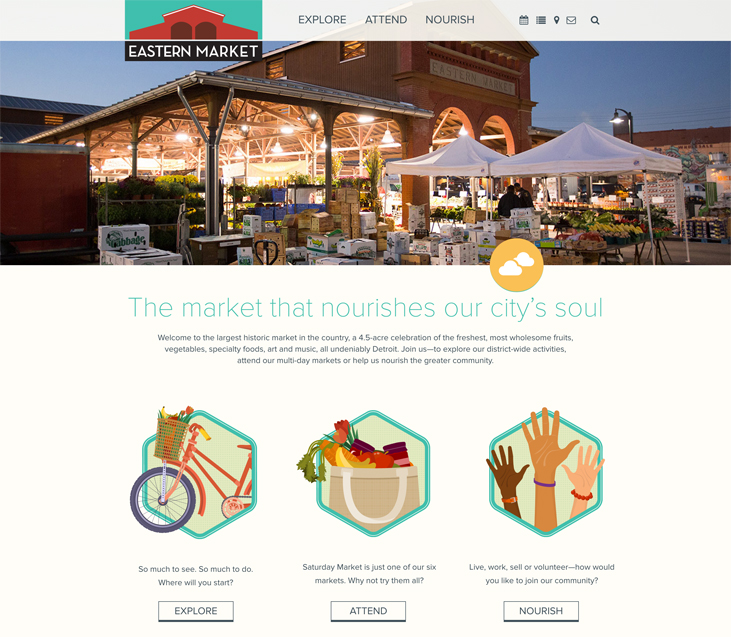
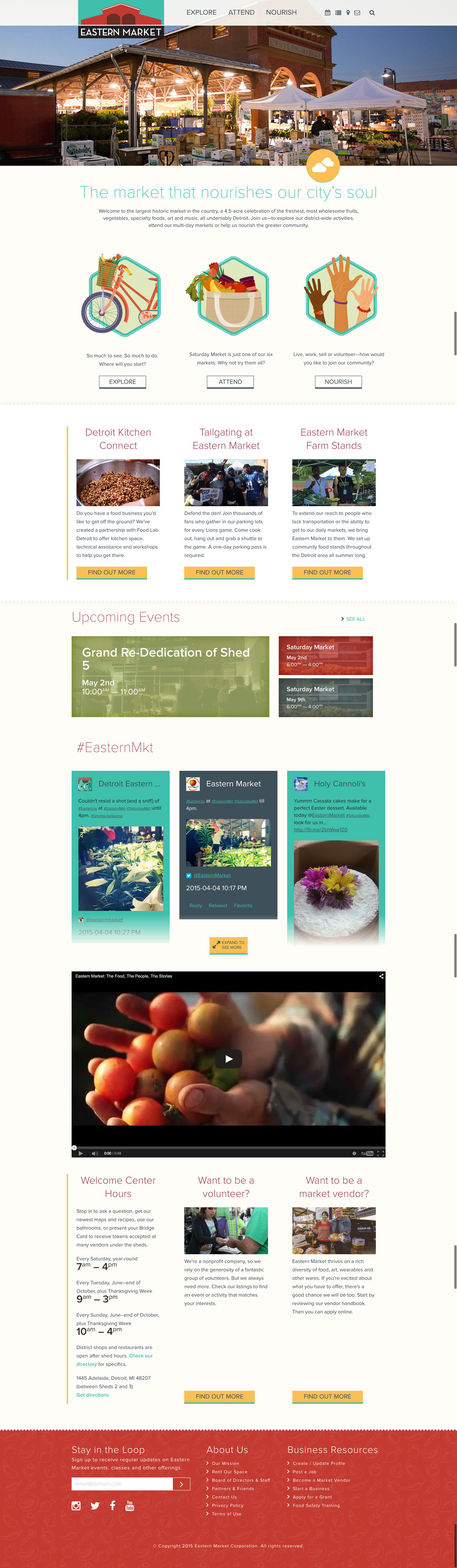
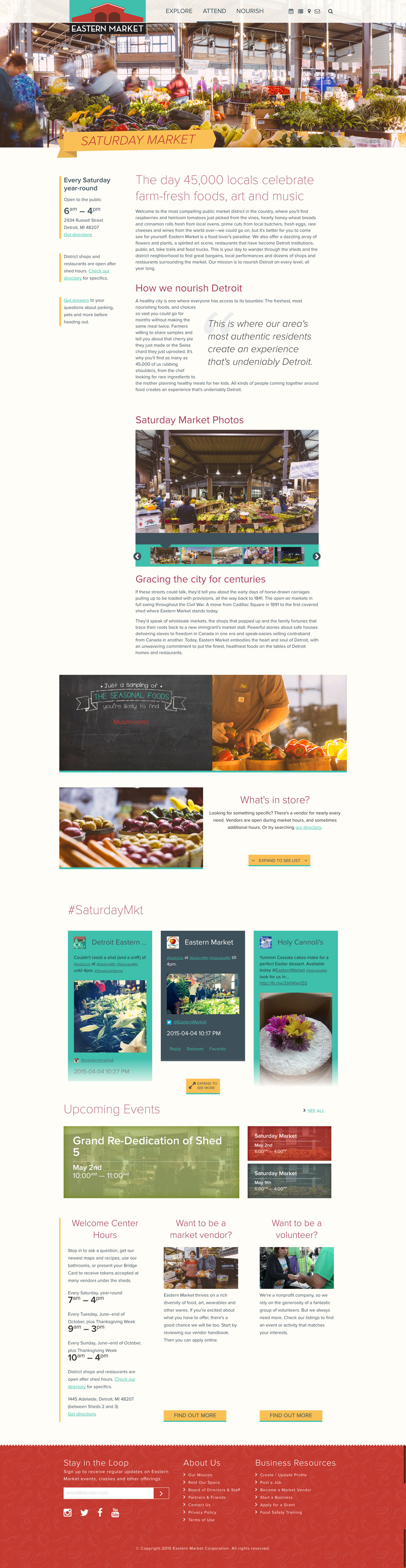
Eastern Market's new website was a complete overhaul (architecture, design, content, and development). Playing the role of project lead, creative director, content strategist, and UX/information architect; the goal was to deliver a modern responsive website while remaining true to Eastern Market's historic culture and Detroit roots.
The website is built using Craft CMS and includes a variety of back end tools. District businesses and market vendors can register for an account, setup a public profile, post events and jobs. This information is fed to relevant sections and modules throughout the site. Logo design and art direction by Kelly Warkentien. UX/UI design and development led by Derek Kuschel. Copy by Nancy Wellinger. |
|

(click for full site)
|
"The District Detroit" Website
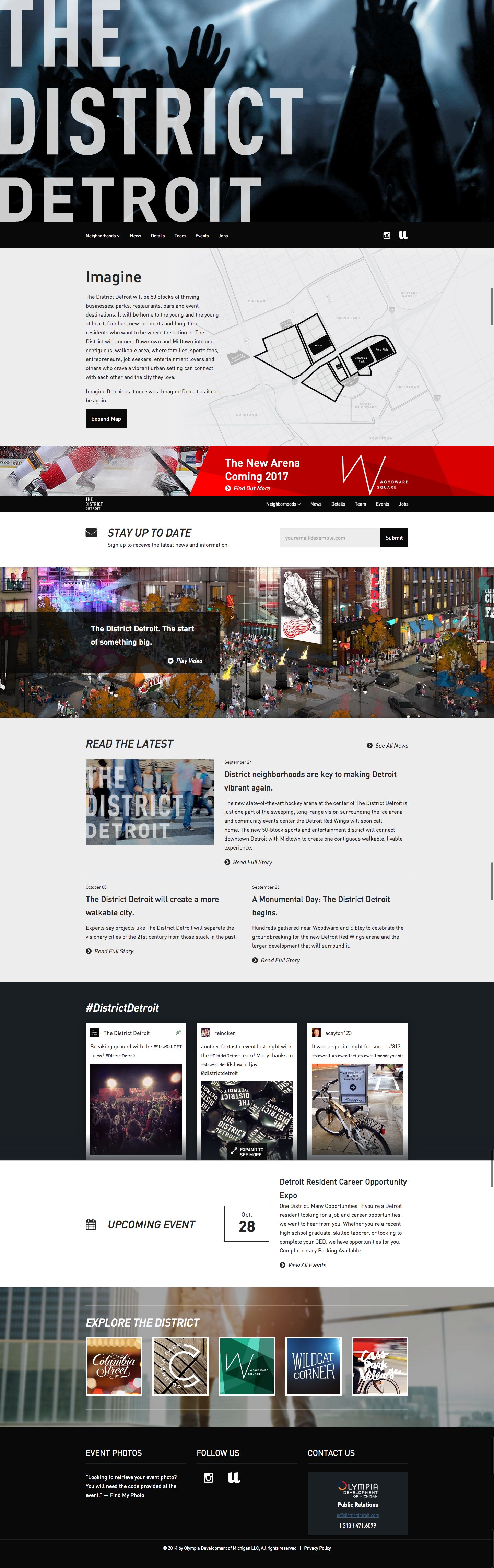
districtdetroit.com This website is the hub for everything going on with The District Detroit development project (led by Olympia Development) -- home to five neighborhoods and the new Detroit Red Wings Arena (Event Center) scheduled to open in 2017. I played the role of creative and conceptual lead, content strategist, user-experience architect, and client point-of-contact.
The site is fully responsive, built with Craft CMS, and integrates two Detroit-based startup technologies: Linkies and UpTo. Design by Bret Hawpe and Derek Kuschel. Developed by Glenn Martin. |
|
Detroit Lions #OnePride Fan Wall
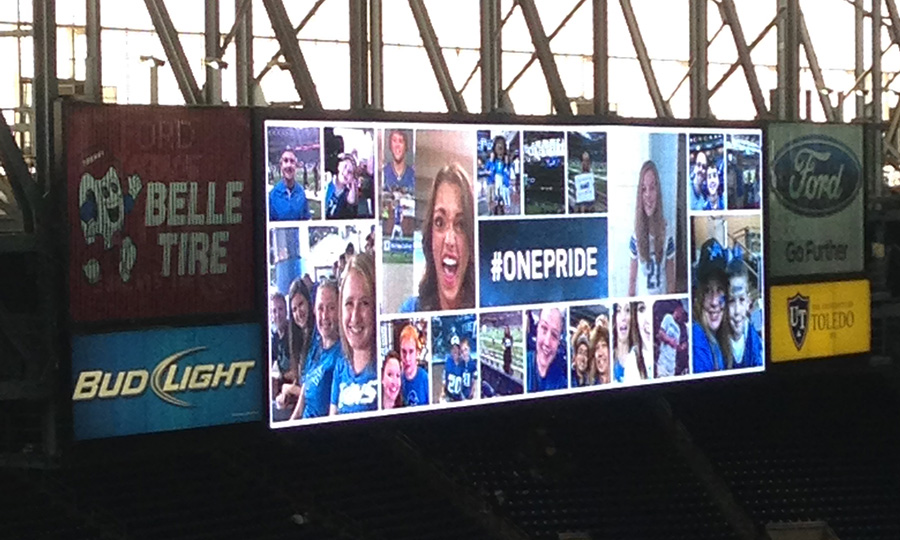
Utilizing the Linkies technology, we developed a branded social feed that powered the stadium monitors and jumbotron, as well as embedded into DetroitLions.com. This feed collects over 25 hashtags from Twitter, Instagram, Facebook, Tumblr and Google+. |
Campbell Ewald
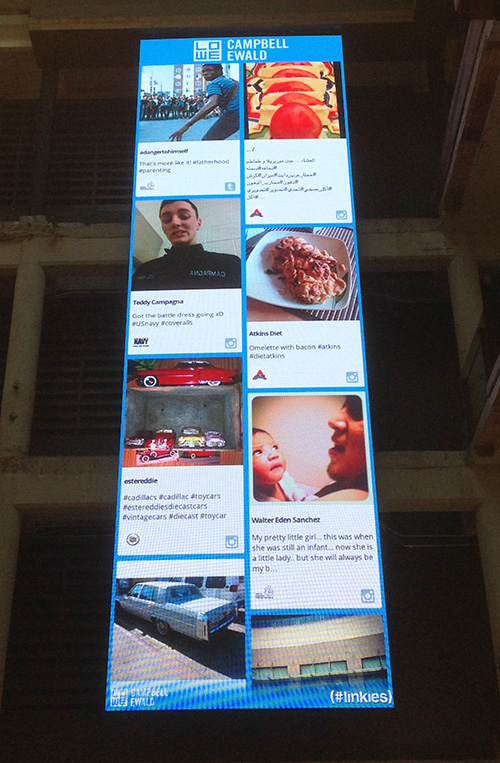
Brand Social Feed This 3-story LED screen curates all social conversations for the agency's 30+ brands, and displays them for everyone in the agency to see. What better way to get to know your brand, than seeing what people are posting about it every day you walk into the office. This web-based application is powered by Linkies technology. |

|
|
U.S. Navy STEM "College Tour" Tablet App
This app was created by Lowe Campbell Ewald and Pixo Group for the U.S. Navy College Tour. This engaging application, featured at the Navy's on-site exhibit, demonstrates the importance of STEM (Science. Technology. Engineering. Math.) education within the U.S. Navy. I worked in the early phases of the project to define the creative approach, select the appropriate gaming/app developer, and work with the events team to define the experience. Design direction by David Barlow. |
|
XG2D.com (X Games to Detroit)
In the heat of the X Games bid between Detroit, Charlotte, Chicago and Austin, we developed a fan site to support the #XG2D movement. The purpose of this website was to curate all social conversation, make it easy to find the official information, and help non-Michiganders answer the question "Why Detroit?" Although Austin won the bid, Detroit's movement generated heavy press, social avocates, and brought the creative community of Detroit together. The website was fully responsive and built using Twitter's Bootstrap front-end framework. The social feed was curated using Linkies. Designed and developed by Derek Kuschel. |

(click for full site)
|
Tumblr Websites
VoteForDetroit.com | CEFalcons.com
Tumblr was selected as the best platform to house ongoing content for these two social-driven campaigns. Both designed by Dimitri Alexander.
VoteForDetroit.com | CEFalcons.com
Tumblr was selected as the best platform to house ongoing content for these two social-driven campaigns. Both designed by Dimitri Alexander.
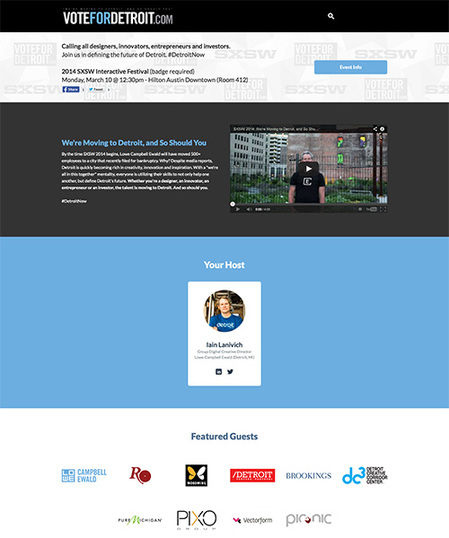
VoteForDetroit.com (click for campaign case study)
|
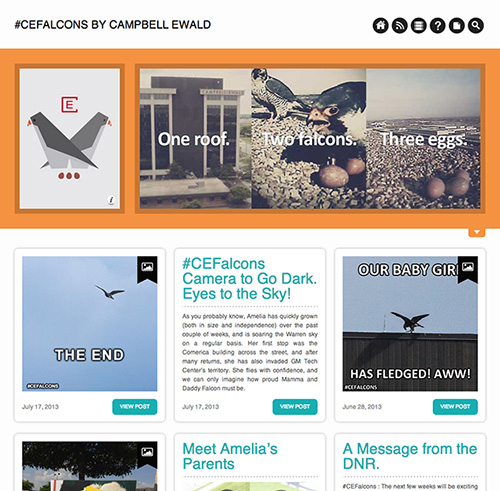
CEFalcons.com (click for campaign case study)
|
|
PoweringMichigan.com Microsite
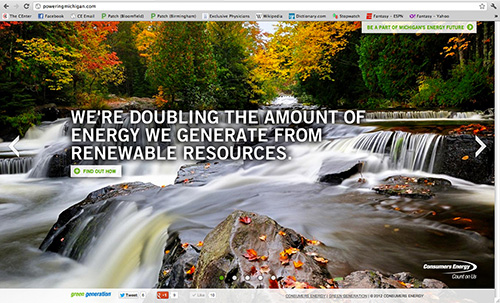
Consumers Energy This microsite was developed to promote ConsumersEnergy's Green Generation initiative. Utilizing beautiful photography and impactful headlines, the purpose was to clearly highlight the proof supporting the initiative, during a heated political campaign. My role was creative concept and approach, and leadership of all creative and development efforts. Design by Holly Ensman-Attebury. Developed by Erik Woods. |
U.S. Navy Websites

Navy.com (click for full site)
|
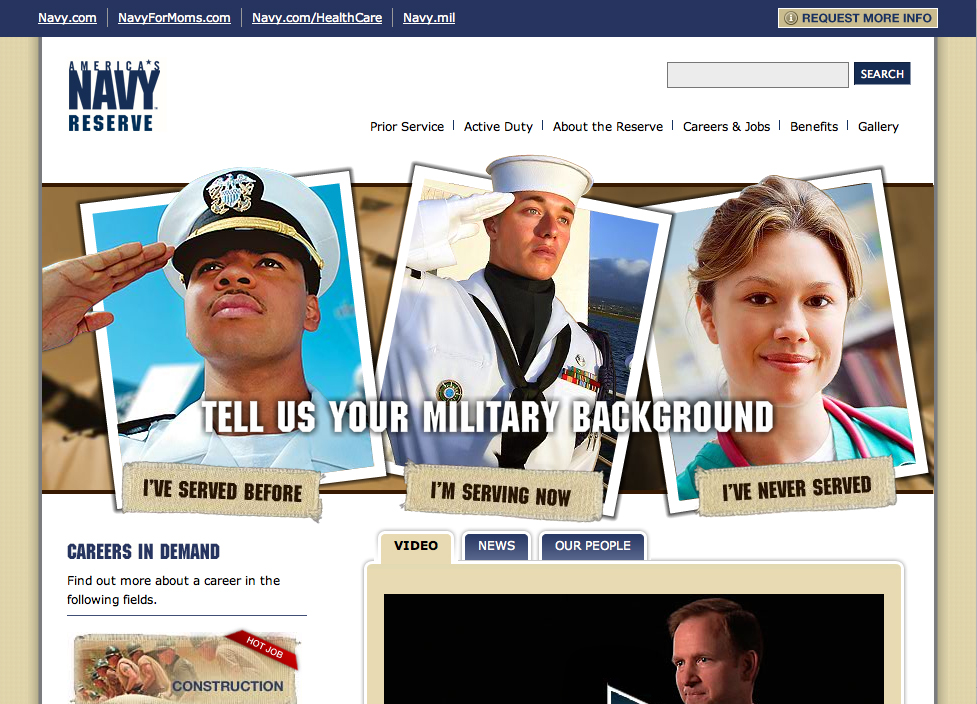
Navy.com
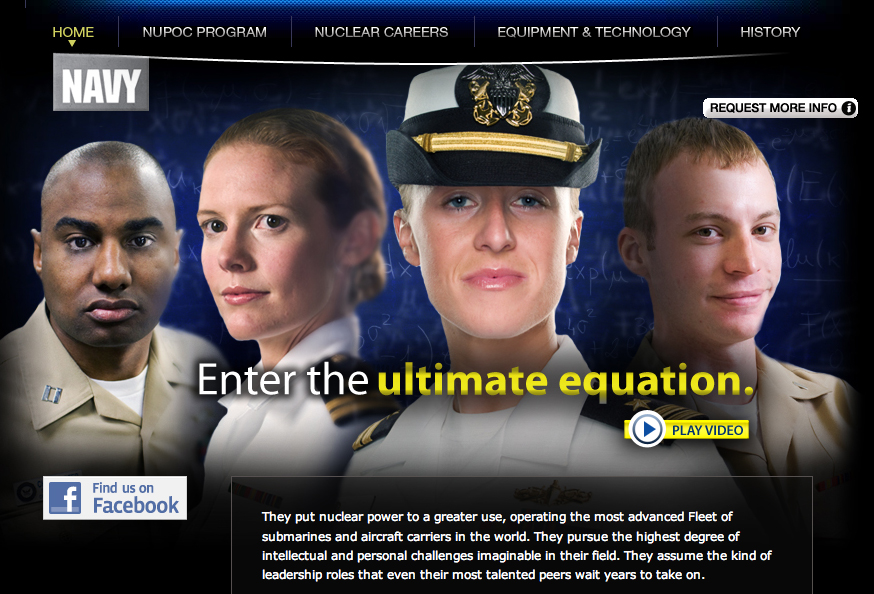
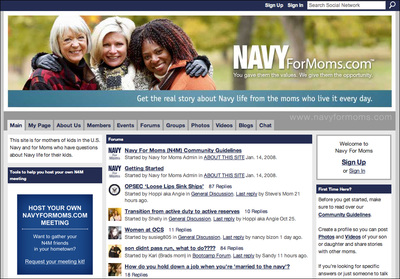
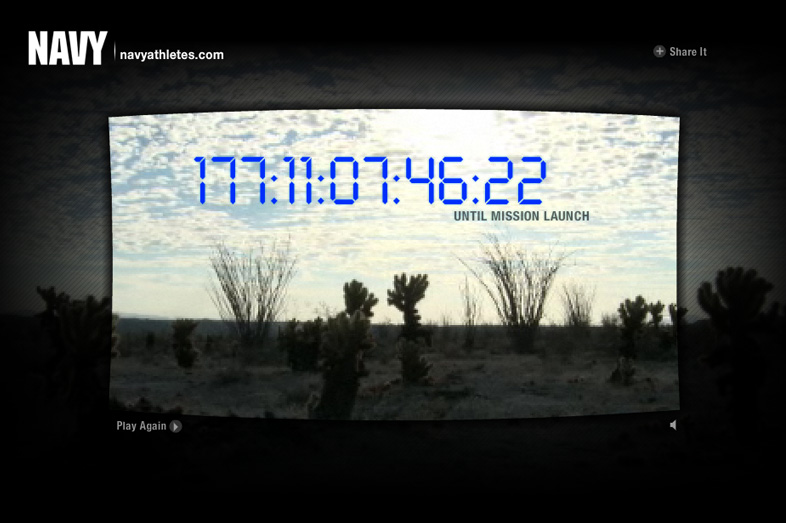
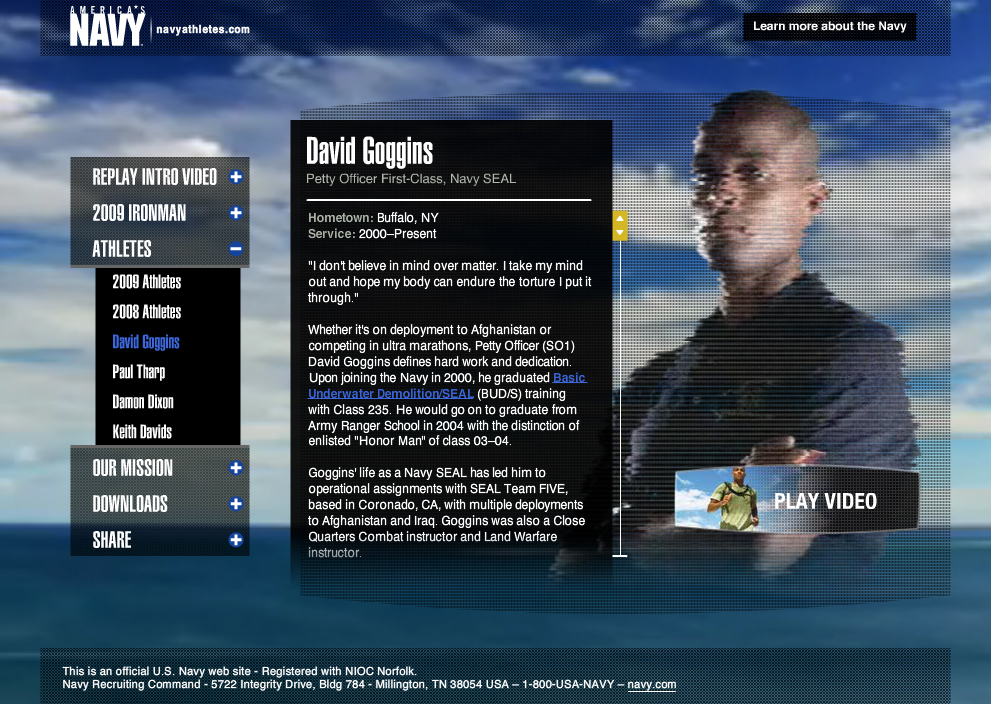
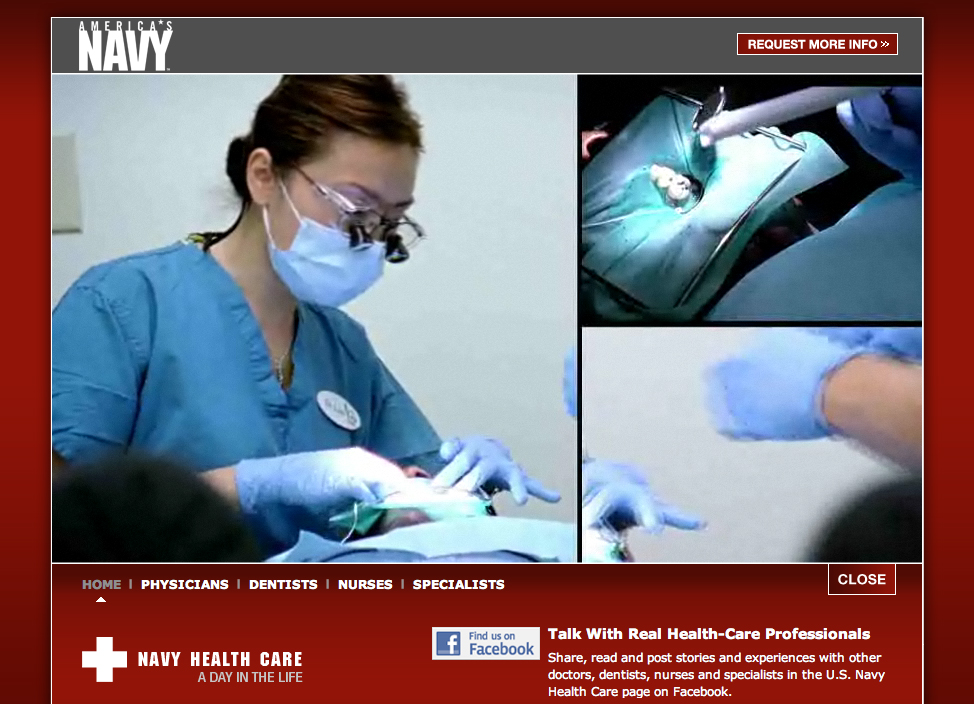
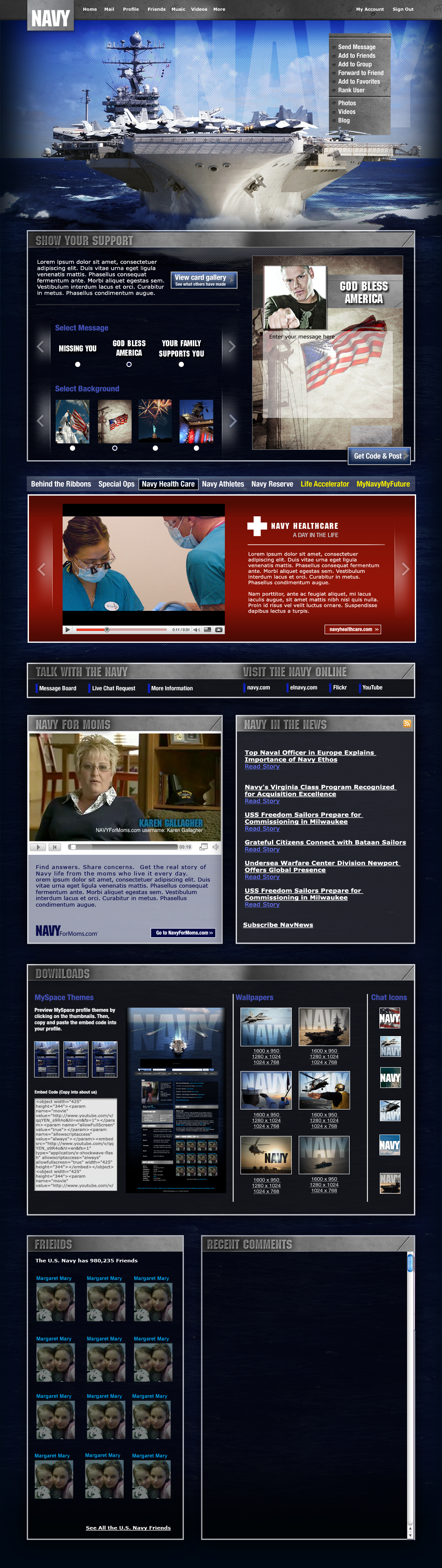
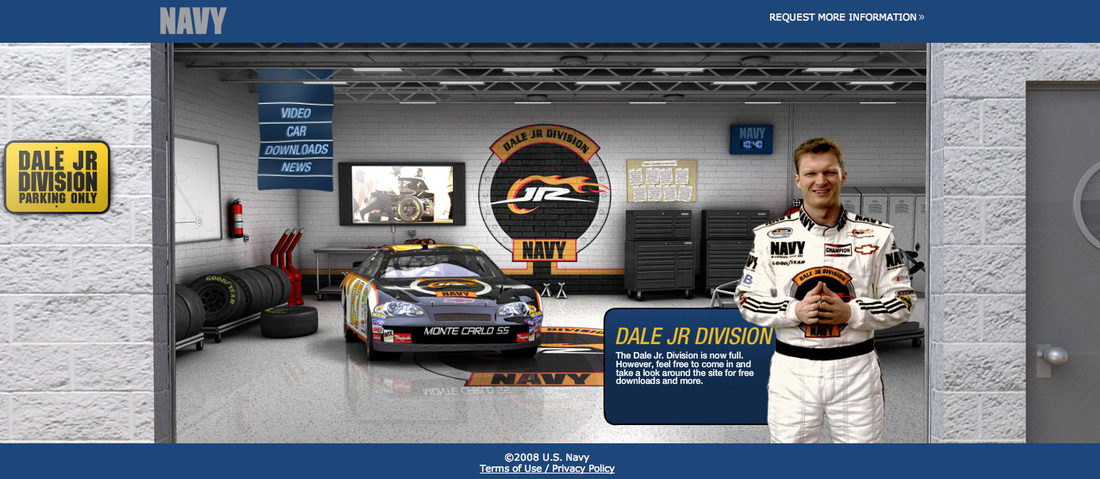
This complete overhaul (architecture, design, development and CMS implementation) was a massive undertaking. I played a creative leadership and conceptual role during the architecture and design phases of the site, getting heavily involved in content strategy, user-experience architecture, user testing, and design direction. The development phase was underway after I became 100% dedicated to the Chevrolet business. The site was responsive and developed with Magnolia CMS. Design direction by Michael James McCallum. |
|
OnStar Global Launch Websites
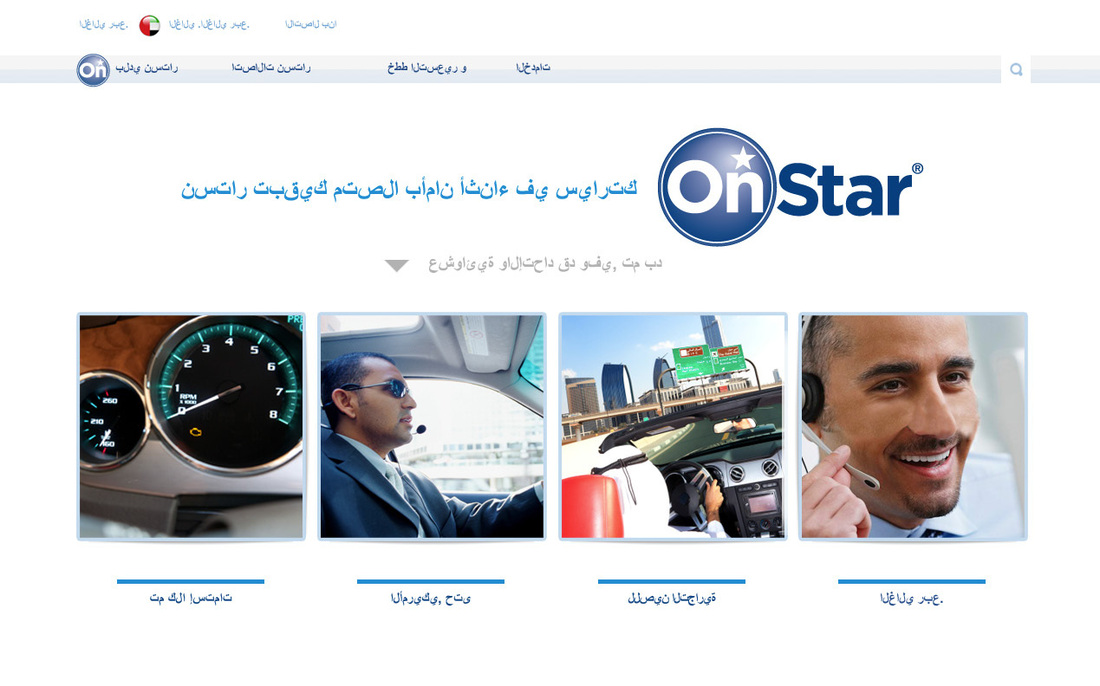
We worked with OnStar's Middle East and Mexico teams to create a web architecture, design and development platform that could work for all global launches. Design by Kelly McGuckin. |
|
Chevy.com Proof of Concepts
With Socrates, the idea was to integrate shopping tools into Facebook's framework. When people "build their own" vehicles, only they know about it. This integration would make it easier to engage your friends and family throughout the decision making process. With Olympus, the idea was to create a personalized platform that could be shaped by user behavior; displaying the right level of brand content, social conversation and sales tools at the appropriate time, to match your mindset (Olympus concept and design by Dustin Davis).
With Socrates, the idea was to integrate shopping tools into Facebook's framework. When people "build their own" vehicles, only they know about it. This integration would make it easier to engage your friends and family throughout the decision making process. With Olympus, the idea was to create a personalized platform that could be shaped by user behavior; displaying the right level of brand content, social conversation and sales tools at the appropriate time, to match your mindset (Olympus concept and design by Dustin Davis).
|
|
|
(click for full site layout)
|
ChevroletVoltage.com Social Community
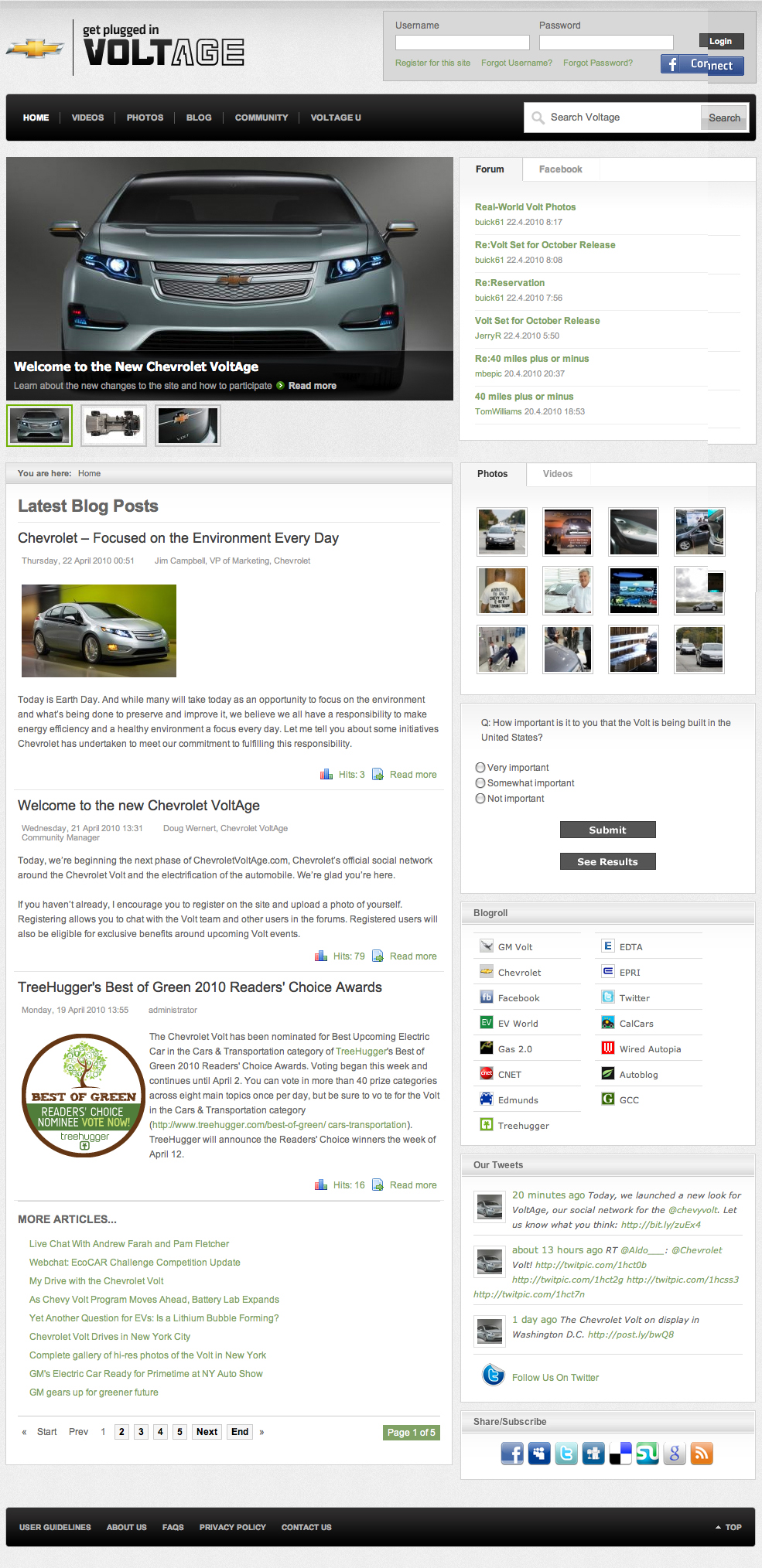
With the production rollout of the new Chevy Volt nearing, the questions were growing. Everything from simple how-to's to economic impact, and everything in-between. We launched a social community, brought key advocates on board, and steered all questions and conversations to the website. Misperceptions were corrected, negative views transformed, and a new army of Volt advocates unleashed upon the web. |
Chevy "Max & Al" Campaign Microsite & Mobile Apps
(Site design by Bret Hawpe. Apps designed and developed by Struck)
(Site design by Bret Hawpe. Apps designed and developed by Struck)
|
|
|
|
Chevy.com Model Pages
In a time when most automotive sites were busy trying to stay above the fold, we moved Chevy to an editorial approach. Most people were unaware of all the features packed into each model, and to learn about all of them meant a lot of clicks. Our new editorial architecture provided the storytelling options and real estate to ensure each model's story was told in full, with only a scroll. General Motors was so happy with the performance and design options, they decided to roll this architecture out across all divisional platforms (Cadillac, GMC and Buick). Design direction by Dustin Davis. |

New Architecture (click for full layout)
|
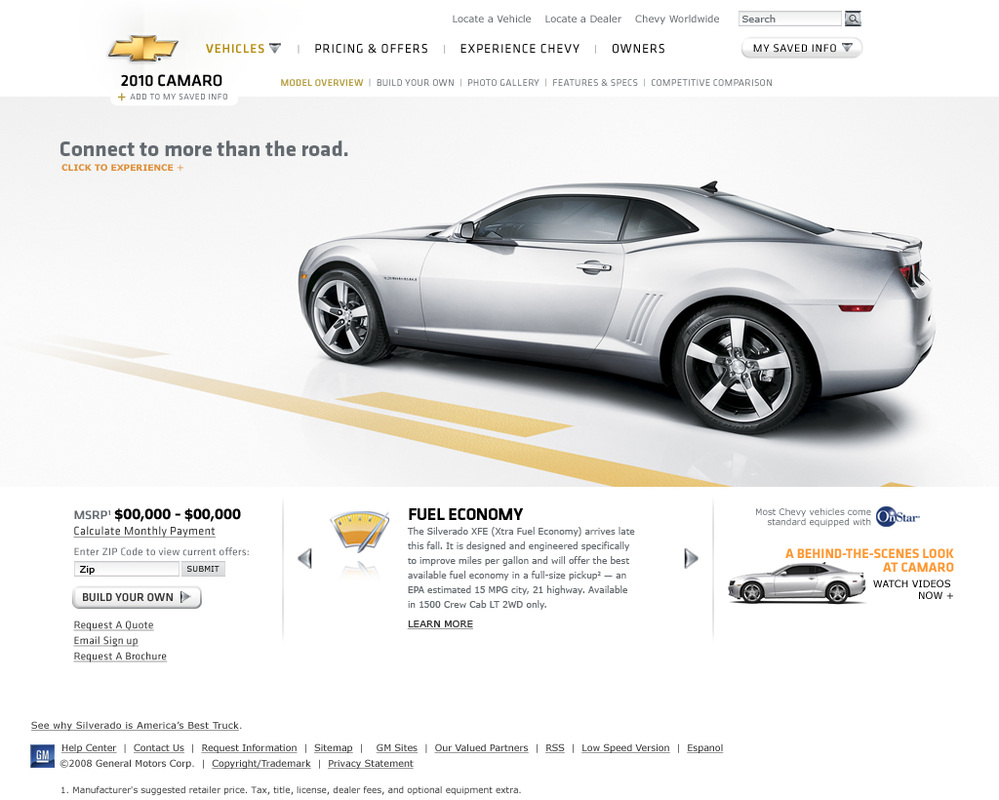
Prior Layout (Camaro Example)
|

New Camaro Example (click for full site)
|
|
Chevy "In Your Area" Facebook CMS
We designed and developed a Facebook-integrated CMS that enabled Chevy Dealers, Regional Sales Teams, and Event Teams the ability to post all events open to the public (racing, auto shows, community-related, and ride & drives). |
|
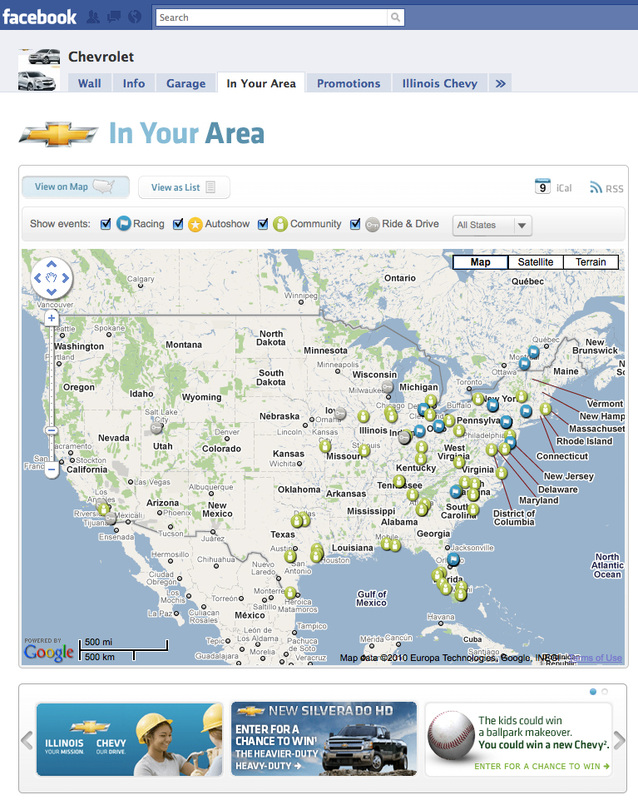

Chevy Promotional Websites
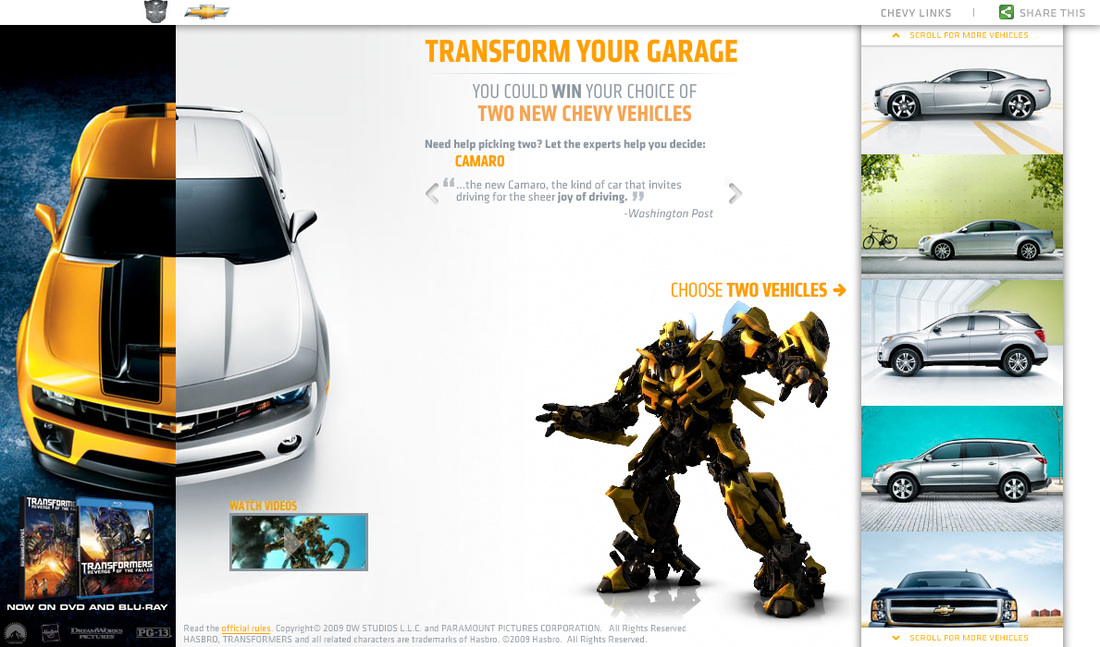
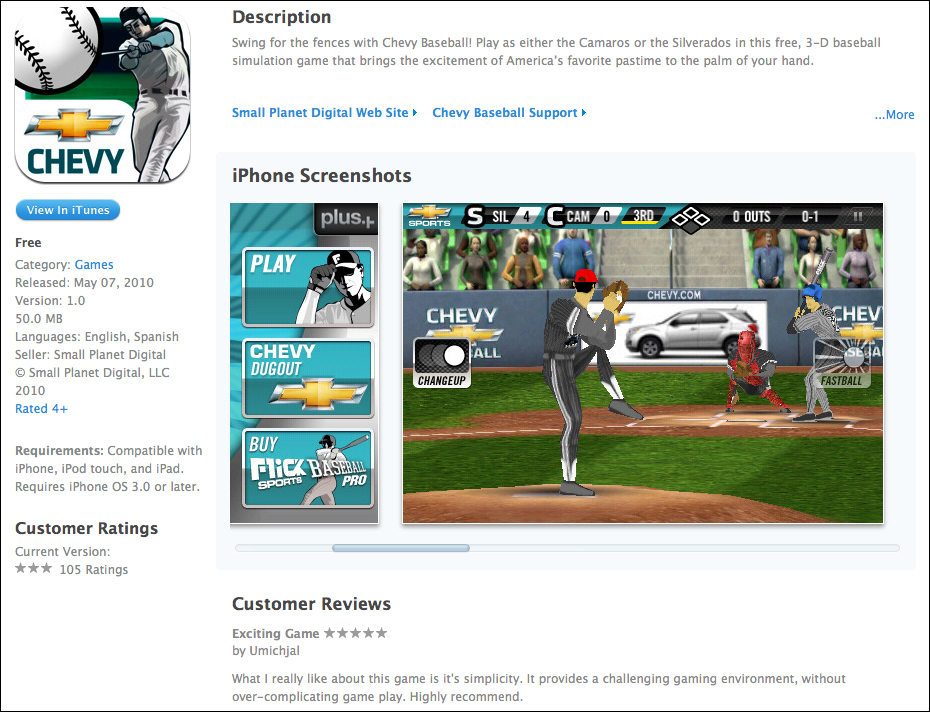
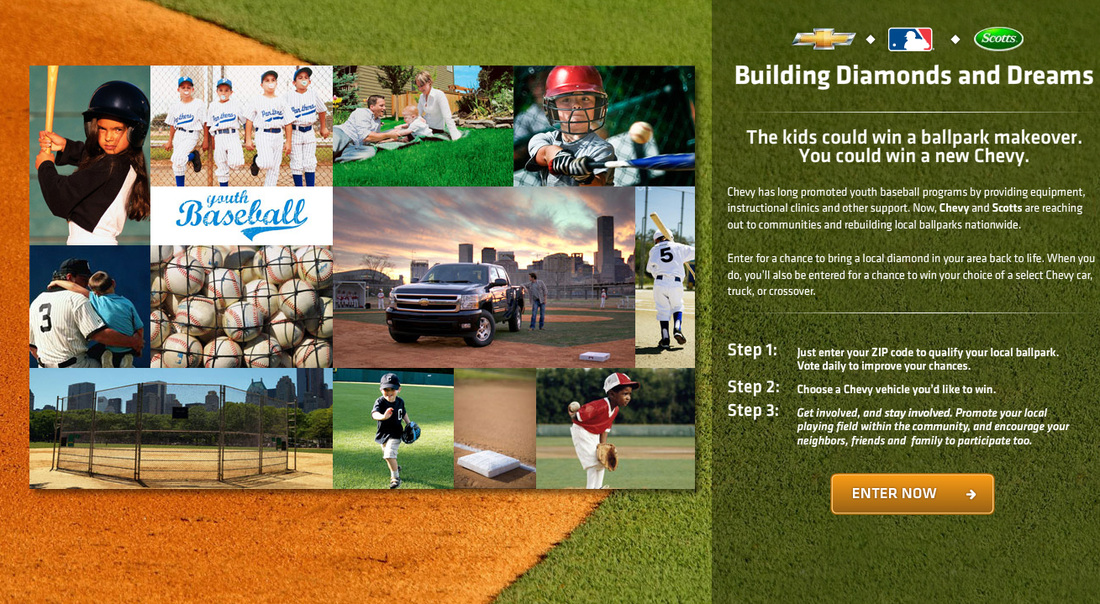
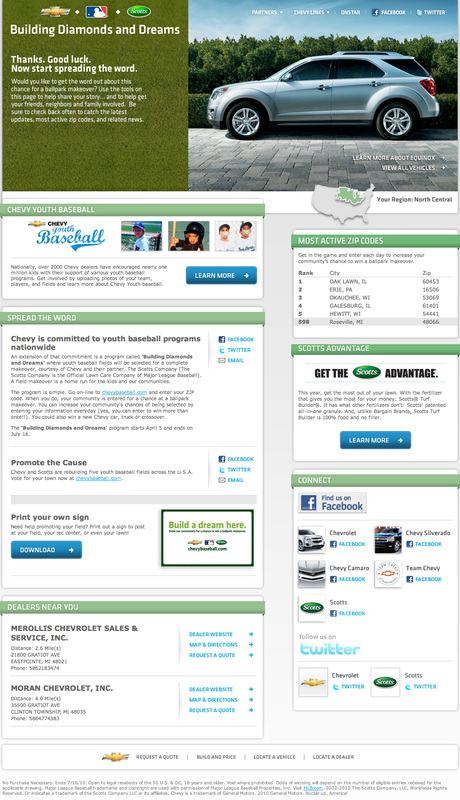
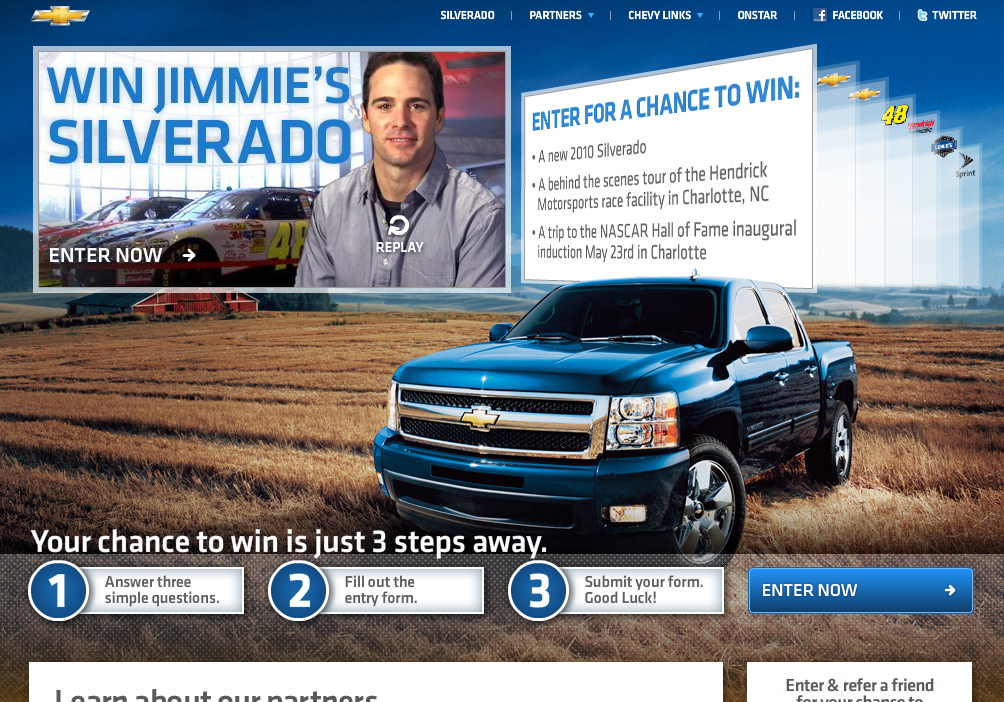
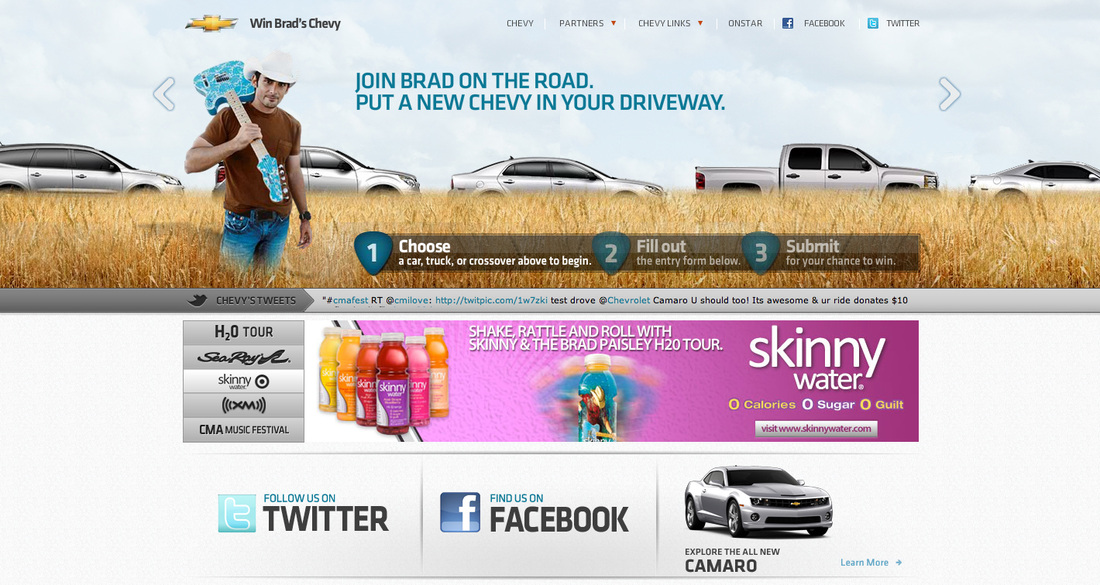

Chevy Launch Websites (Camaro & Silverado HD)
|
|
|
|
|
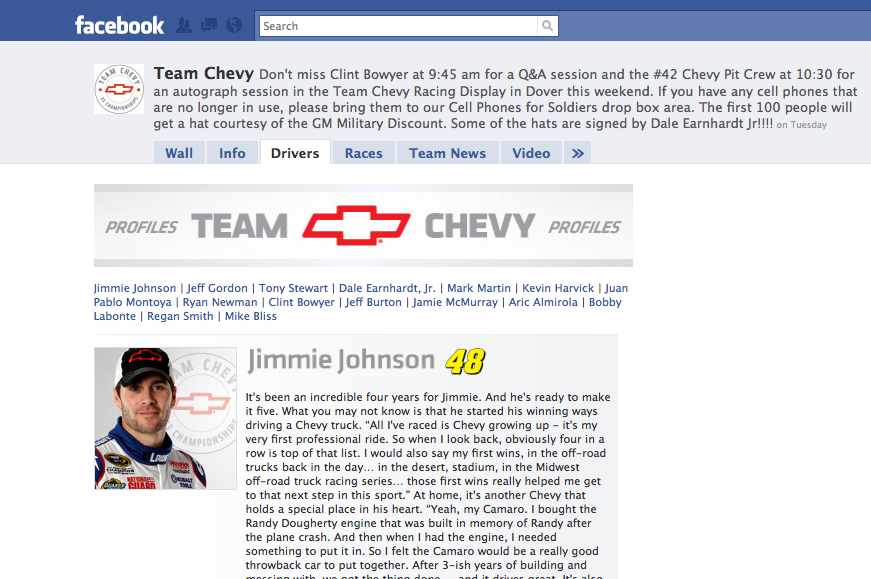
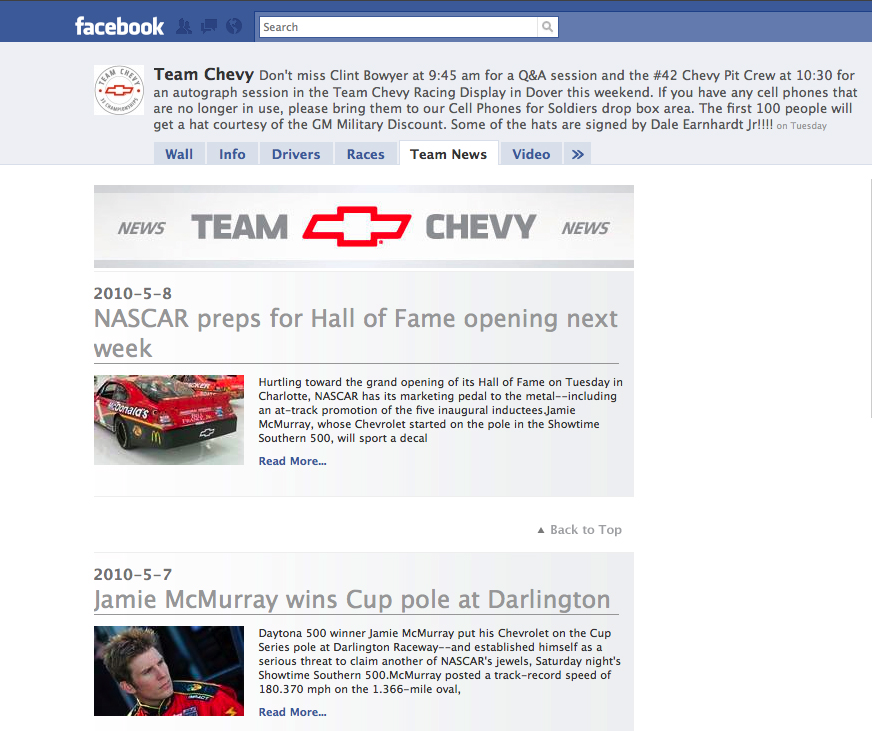
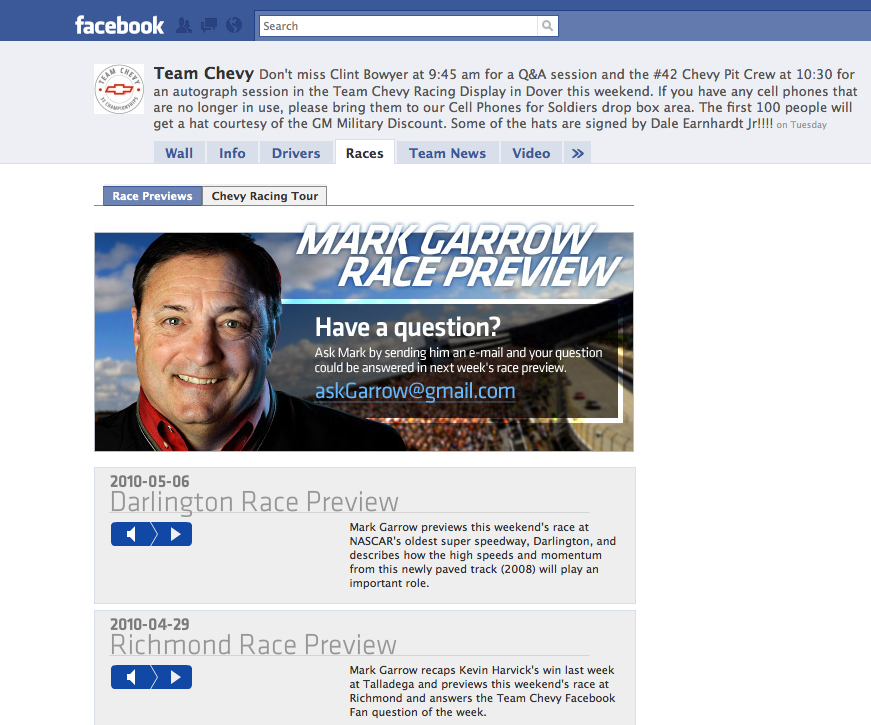
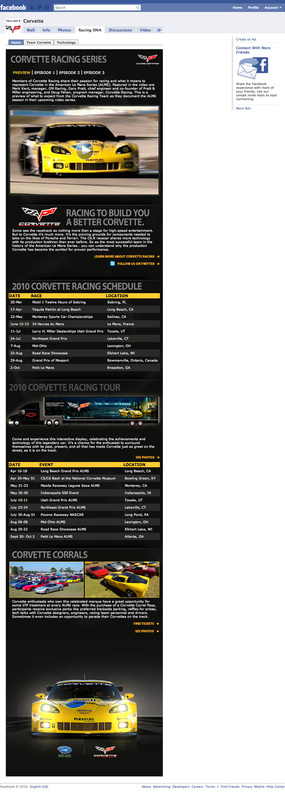
"Chevy Racing" Facebook Integration
Before it became the trend to replace every microsite with Facebook tabs, we launched the new Chevy Racing website as a microsite on Facebook. Tabs were used as navigation to switch between sections, audio podcast and news updates were loaded via a custom CMS. |
|
Carhartt Demolition
The "Demolition" digital campaign was created to raise awareness of Carhartt’s redesigned website. Playing off the “Work Strong” theme, and the true nature of the Carhartt brand, the old website was redesigned to appear as a construction scene. When a visitor came to carhartt.com, they were greeted by the Demolition foreman — who asked them to help demolish the old website by selecting a tool of their choice. Designed and developed by Chris Scinta and Andy Blockno. |
|
|
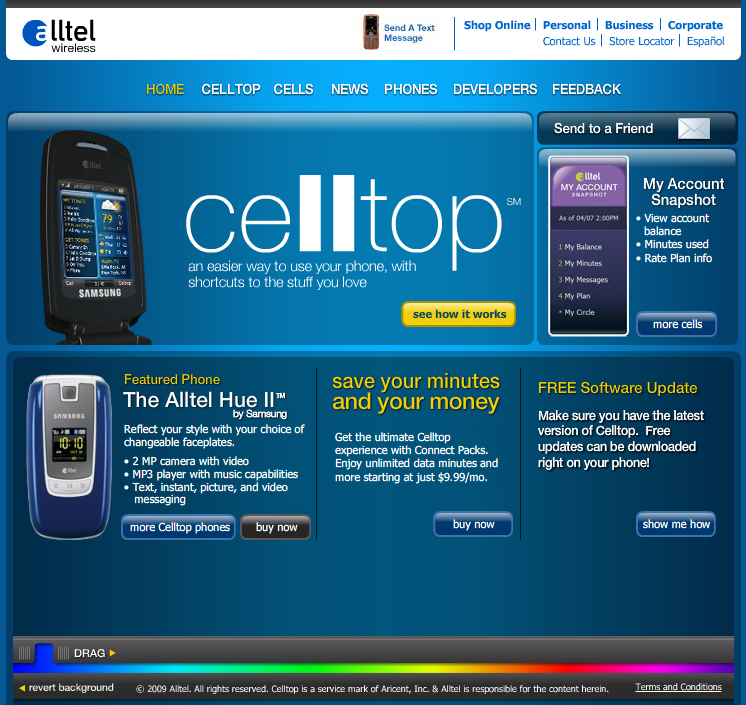
Alltel "Celltop" Product Launch
Alltel launched its new highly customizable operating system at the exact same Consumer Electronics Show (CES) that Apple revealed the iPhone. However, Celltop still managed to get its share of press for its sleek design, personalization features, and variety of embeddable options. The launch website was designed to mimic the styling of the actual Celltop interface. The bottom of the site featured a color bar users could drag to completely modify the color scheme of the website to match their preference (identical to the actual feature in the OS). Designed and developed by Derek Kuschel. |
|
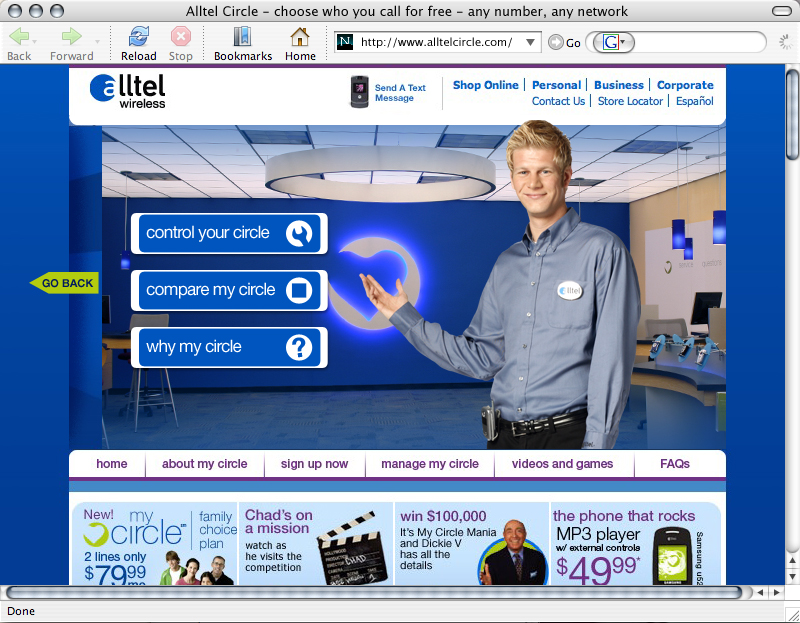
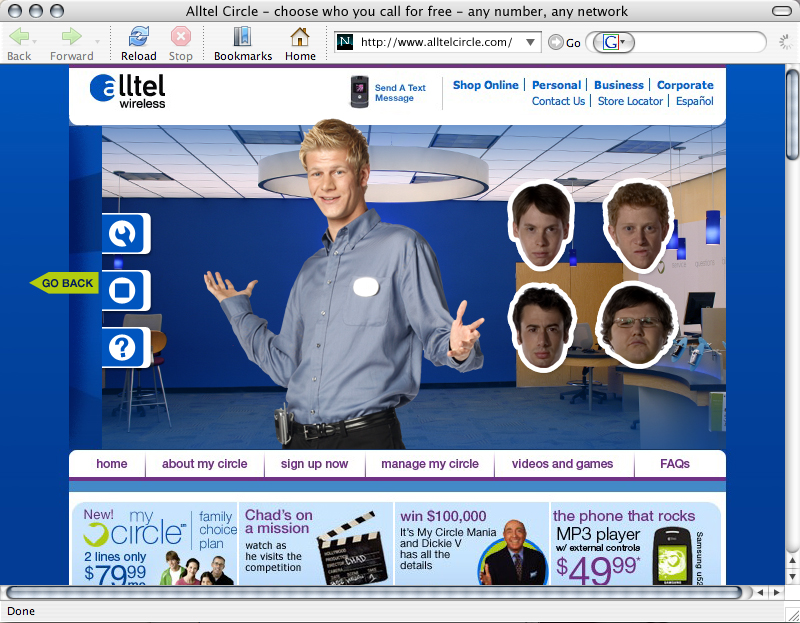
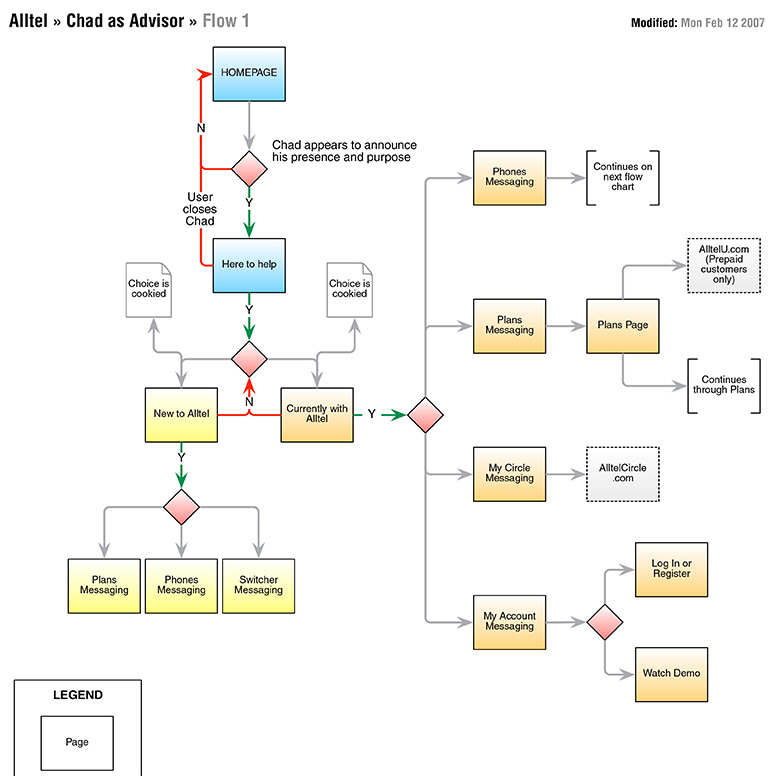
"Ask Chad" Sales Advisor Web App
This web application was created for Alltel Wireless, in which Chad (the campaign spokesperson) answered common questions and misperceptions about Alltel and its services. The application featured over 50 video clips, which were shot through Plexiglass so Chad could pin up and pull down a variety of custom props designed to be buttons and navigation items (the user could click on). It was a pretty interesting challenge. Watch the demo. |
|

|
|
Alltel "ManCave" Campaign Microsite
The cornerstone of the "Man Cave" campaign was OfficialManCave.com -- a website that offered unique insight into the core Alltel marketing characters with an immersive 3D tour of their “secret lair” featuring over 75 videos and interactive games, and user generated content. Visitors were able to unlock hidden rooms, videos, and exclusive offers for Alltel’s online store. This website was the first to use room-by-room transitions via Steadicam. Site designed by Dustin Davis and Michael Kern. Developed by Struck. |
Alltel Wireless Promotional Sites
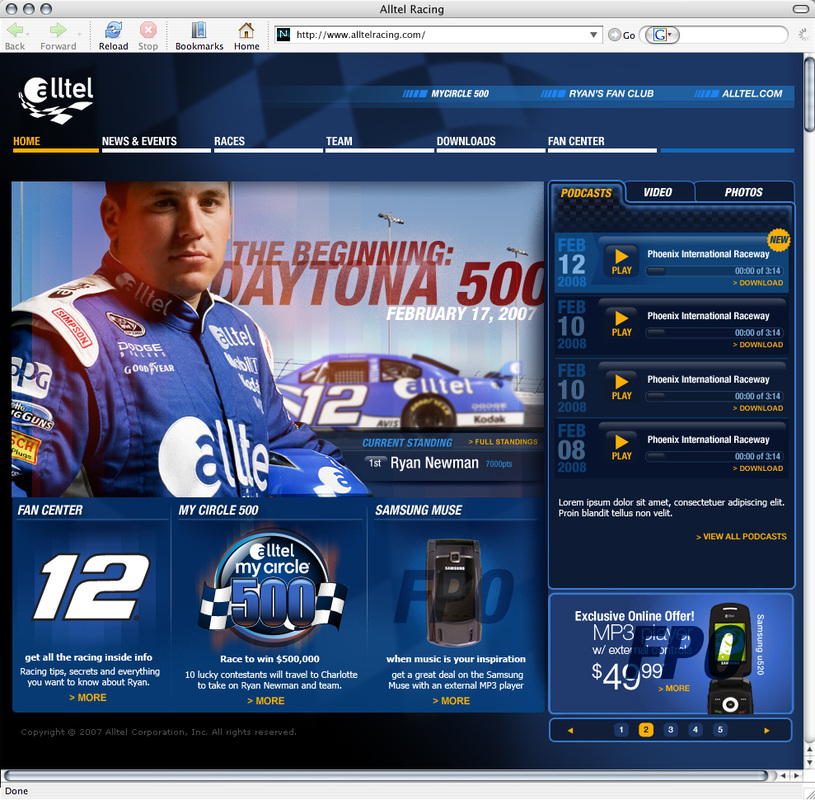
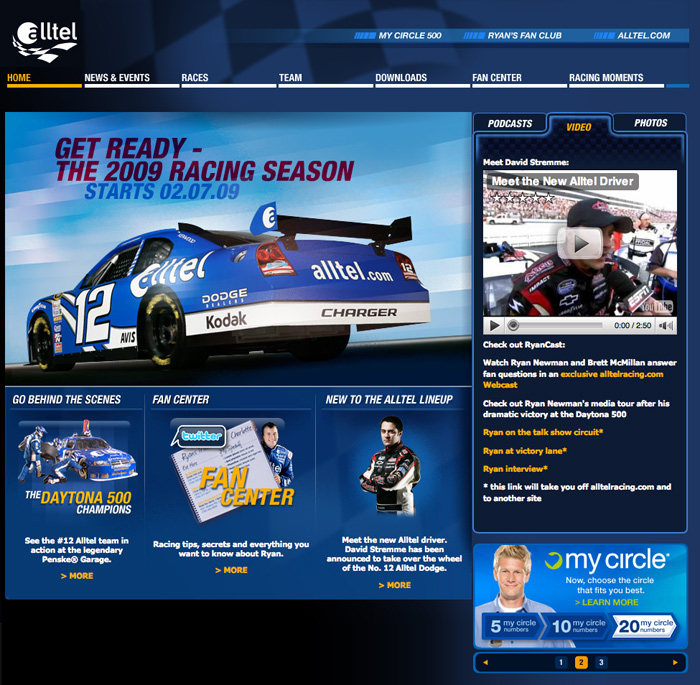


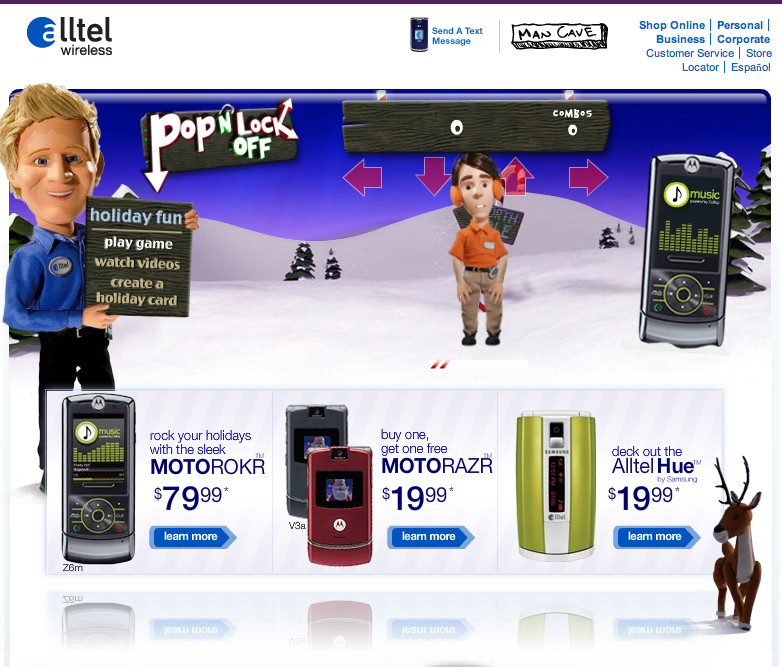
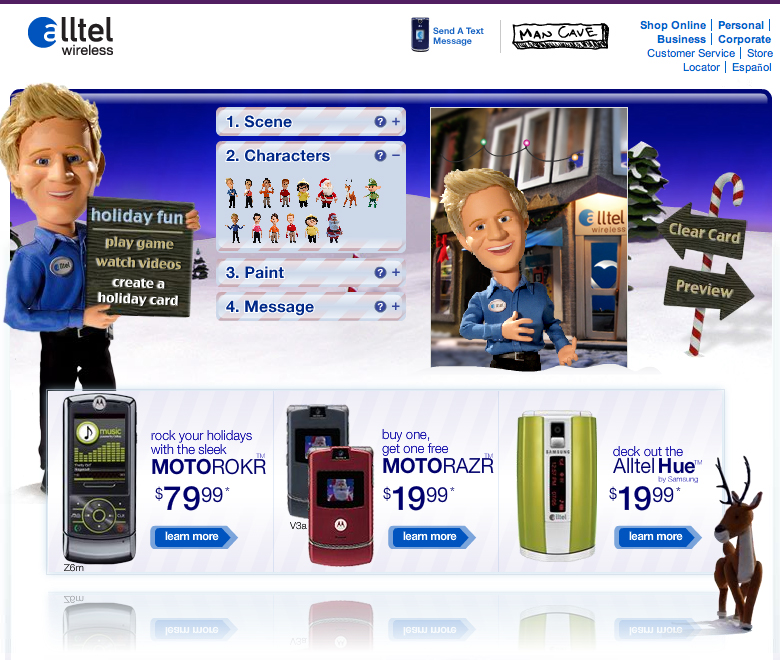
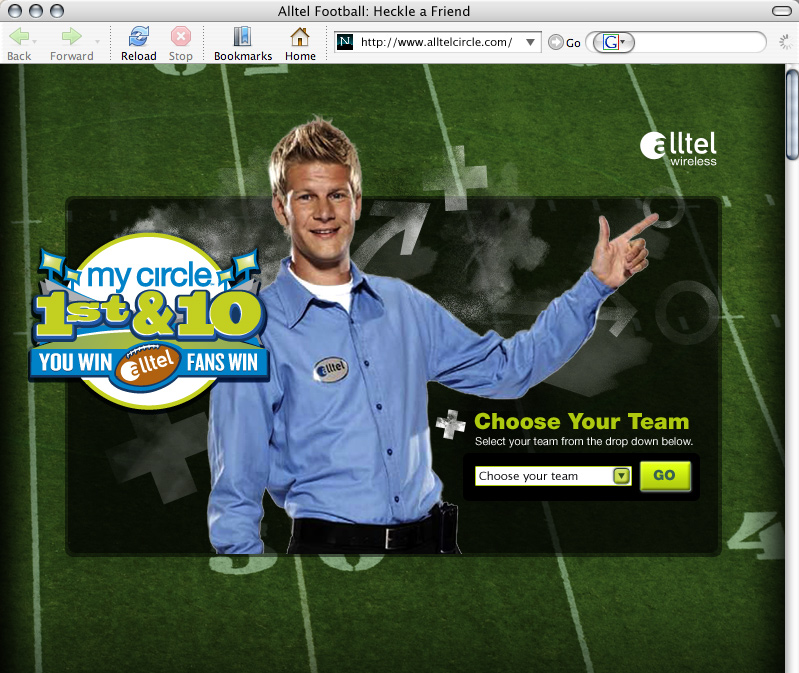

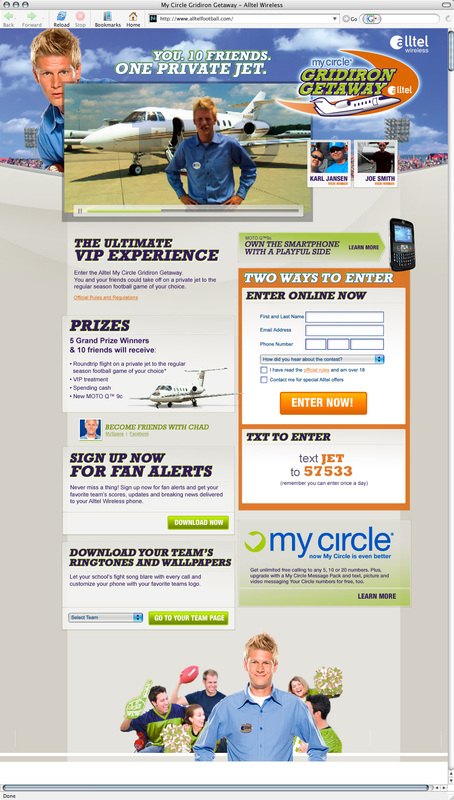
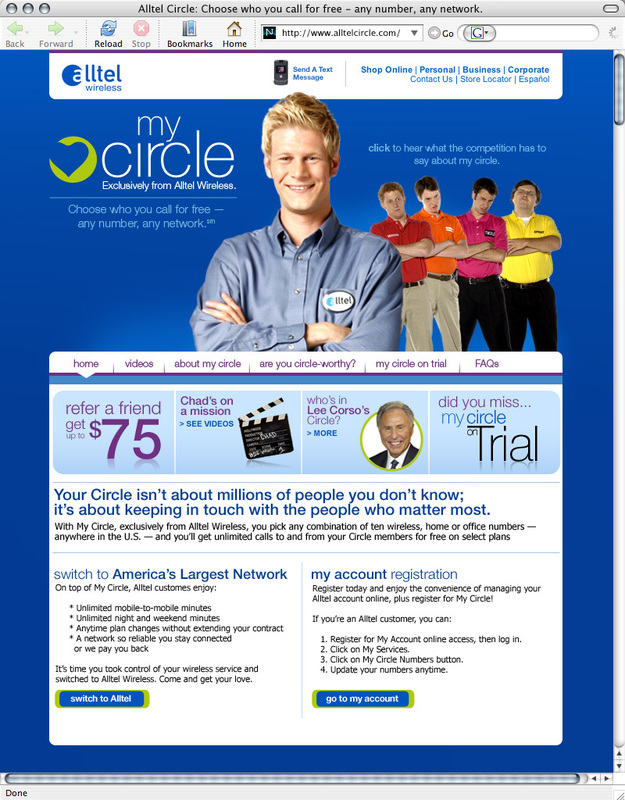

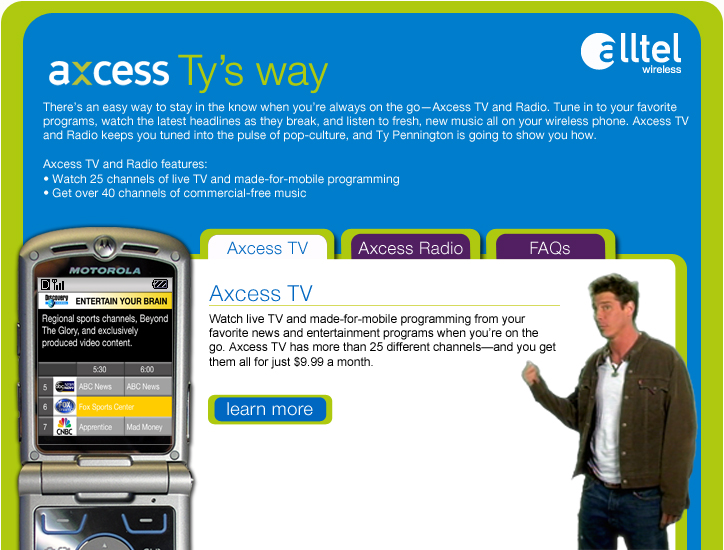
|
"My Circle on Trial" Campaign Websites
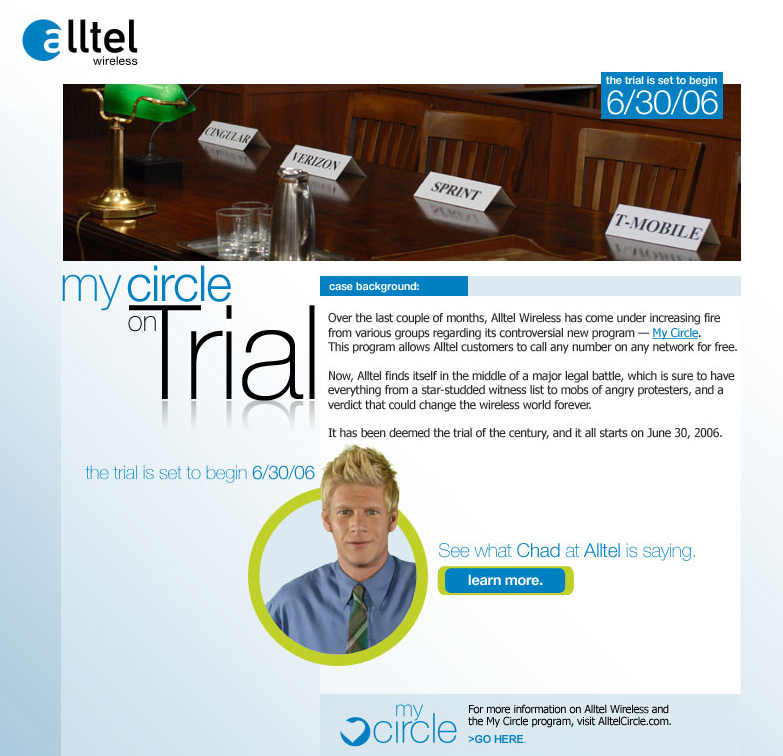
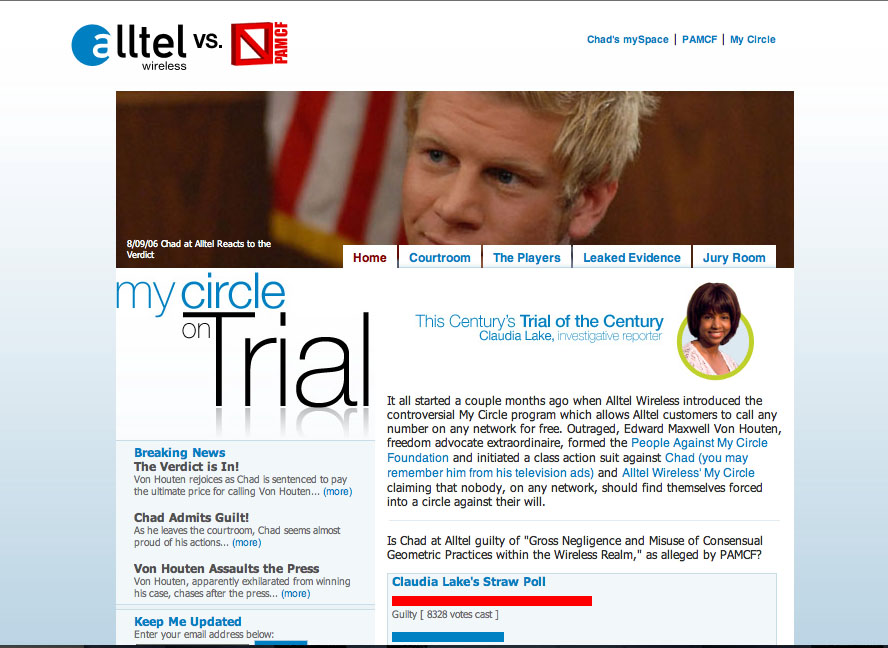
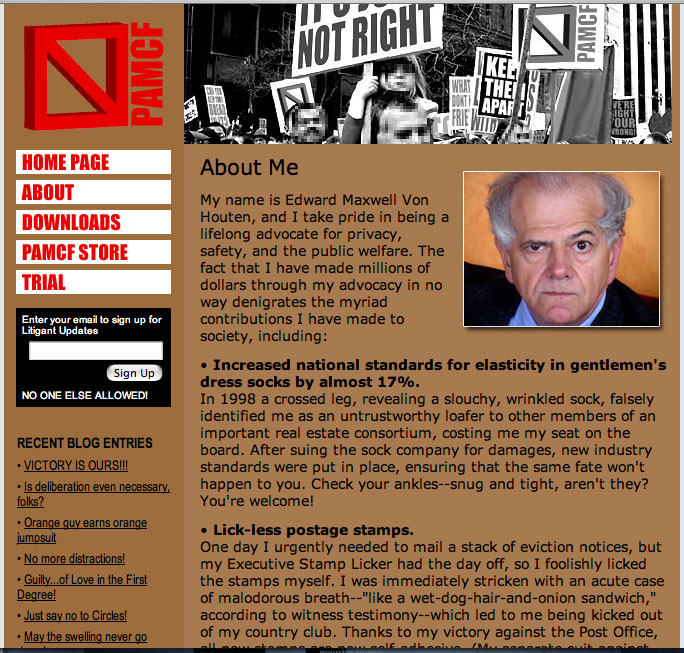
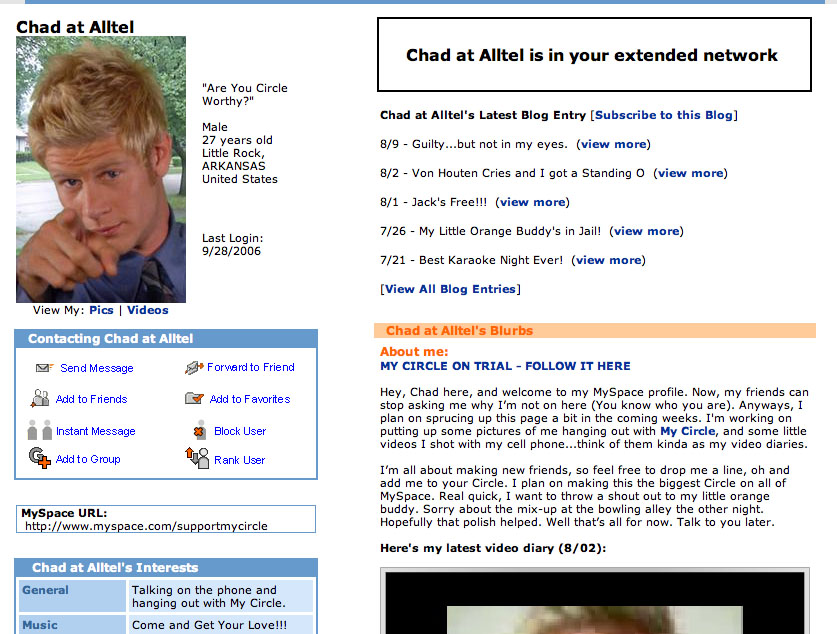
The seven week mock trial featured Alltel’s "My Circle" versus "The People Against My Circle Foundation (PAMCF)" for allowing customers to add people into their Circle without consent. The campaign featured three websites, including MySpace, used to showcase the point-of-view of the main Characters. Production by Lowe Campbell Ewald and GMD Studios. |
|
|
|
U.S. Navy Viral Campaign: Gorgonbox.com
To promote the launch of the U.S. Navy's online video game "NTE: Strike & Retrieve," we concepted a pre-launch viral campaign known as Gorgonbox. This site had the Sony, Microsoft and Nintendo communities debating who was behind this mysterious website and what product it was promoting. It featured a fully-functioning code cipher, hidden pages, and unlockable game concept art. Site designed and developed by Dustin Davis. Video game produced by Whatif Productions. |
|
OnStar "Batman Adventure" Promotion
This campaign was at the forefront of TV-to-Web brand extensions consisting of online videos and choose your own adventure e-Comics. Working with DC Comics, I played conceptual creative, user experience architect, producer, and client point-of-contact roles on this project. This campaign received national industry recognition. Design by Chris Scinta. eComics by DC Comics. |
|
|
|
"Who is Benjamin Stove?" Alternate Reality Game
“Who is Benjamin Stove?” was an alternate reality game (ARG) using “living” online characters and puzzles, with the purpose of building awareness about General Motors’ renewable fuel initiatives and programs. The campaign ran for four months, and was the viral/underground marketing component of GM’s “Live Green Go Yellow” campaign. This immersive campaign was played out across four websites, included 10 live events (notes hidden in nine libraries across the country, and a live meeting in downtown Manhattan), anonymous phone calls and text messages, and a series of unbranded blog and classified ads. Design by Kevin Omans. Game development by GMD Studios. |
Data Applications
|
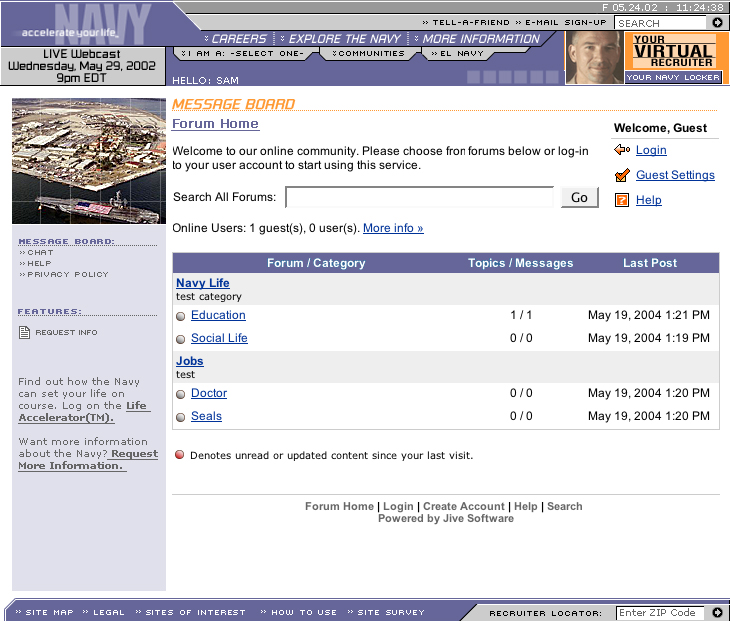
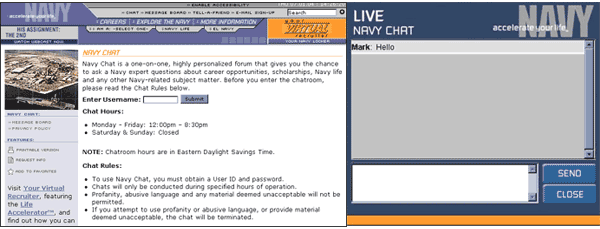
U.S. Navy Live Chat & Message Board
Launching the first military live chat on Navy.com required collaboration on all fronts (Internal, Client, and Navy Customer Service teams). My role was to research and select the technology vendors, manage the implementation, write all training documentation, and train all parties. |
|
|
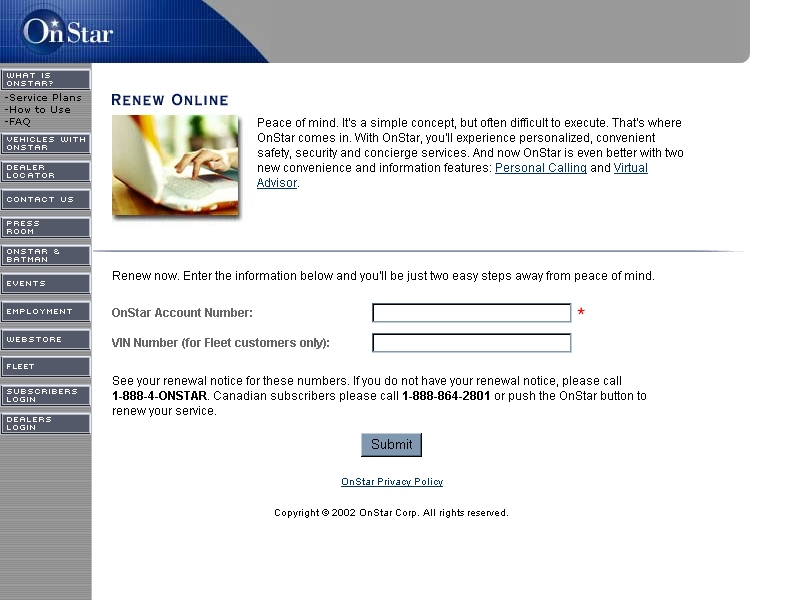
OnStarRenewal.com eCommerce Platform
OnStar asked us to completely revamp their existing online renewal platform. We worked with OnStar's IT group to define specs and requirements, determine system workflows, payment handling, data transfer, and user-interface architecture and design. I handled all producer and UX duties. |
|
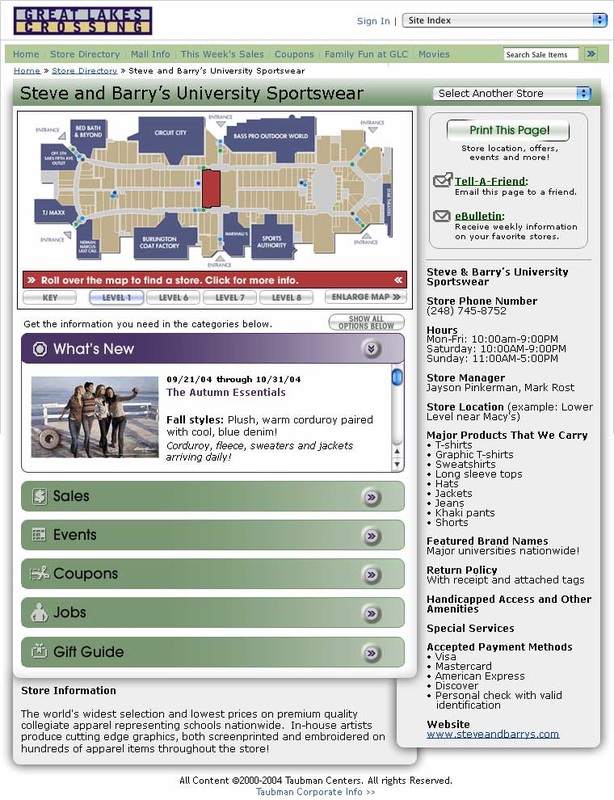
Taubman "Interactive Mall" Application
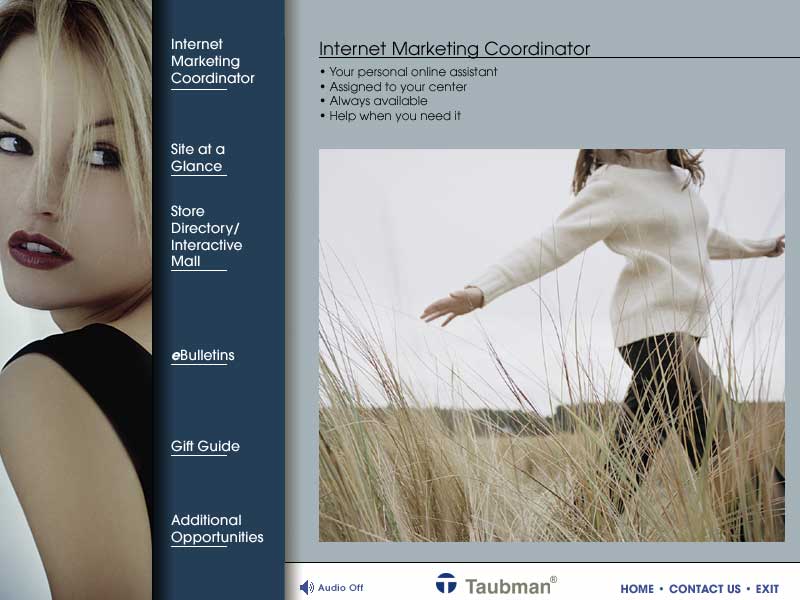
We worked with Taubman to create a universal CMS to populate their independent consumer-facing mall websites. The CMS enabled mall teams to manage the visual mall directory, store profiles, events, sales and jobs. My role was lead producer, user experience architect, and business analyst. |
|
|
|
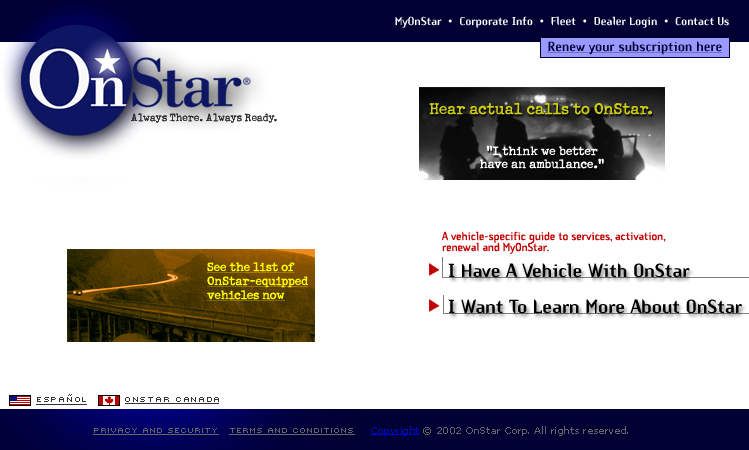
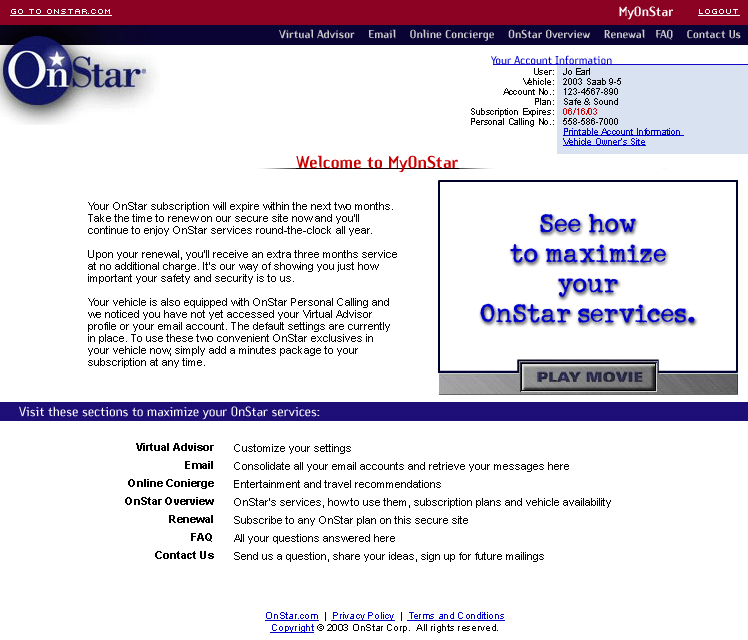
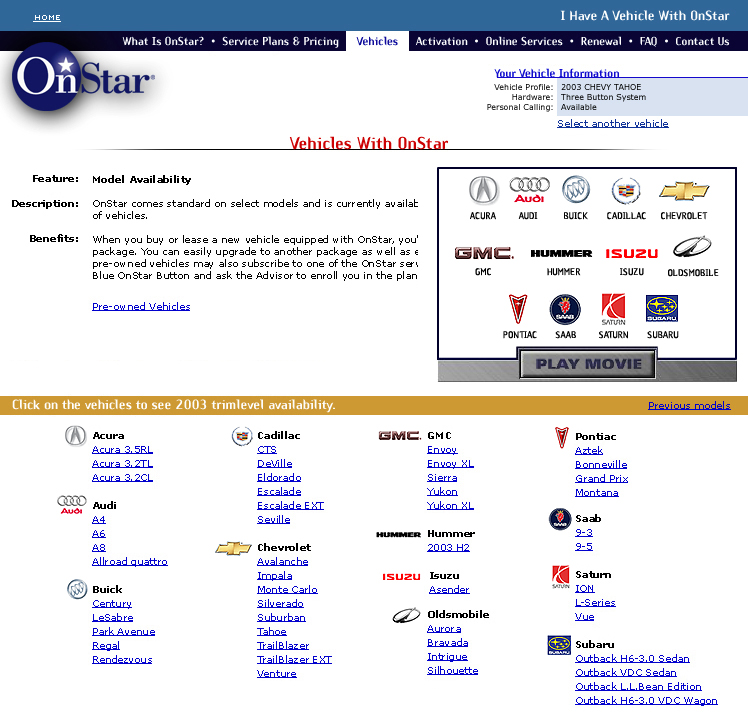
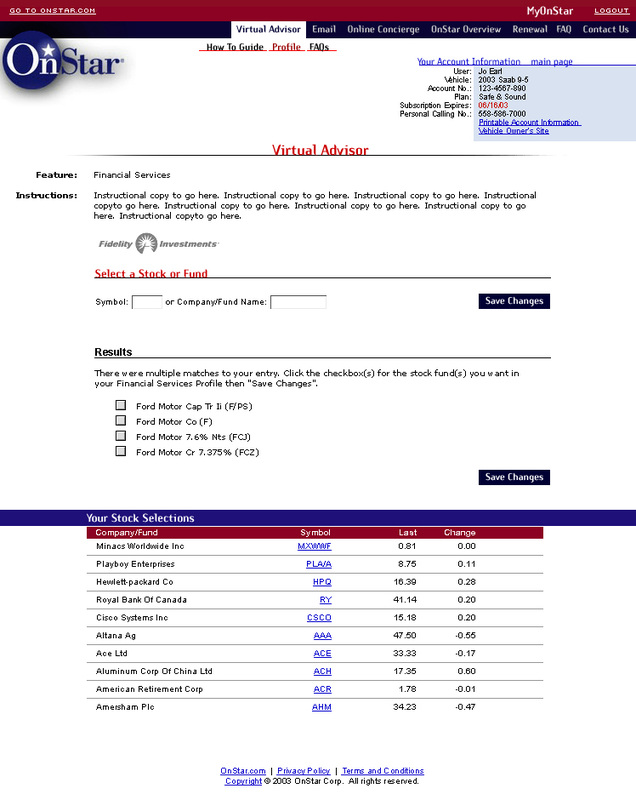
OnStar.com Global Site Redesign & Rebuild
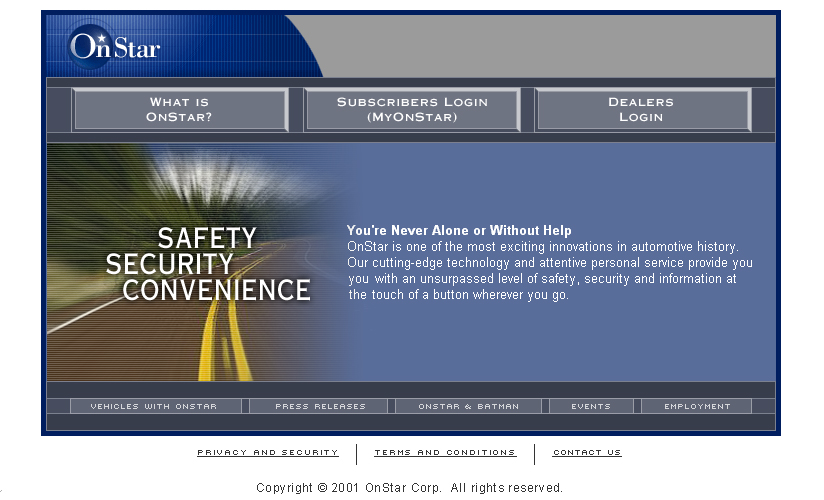
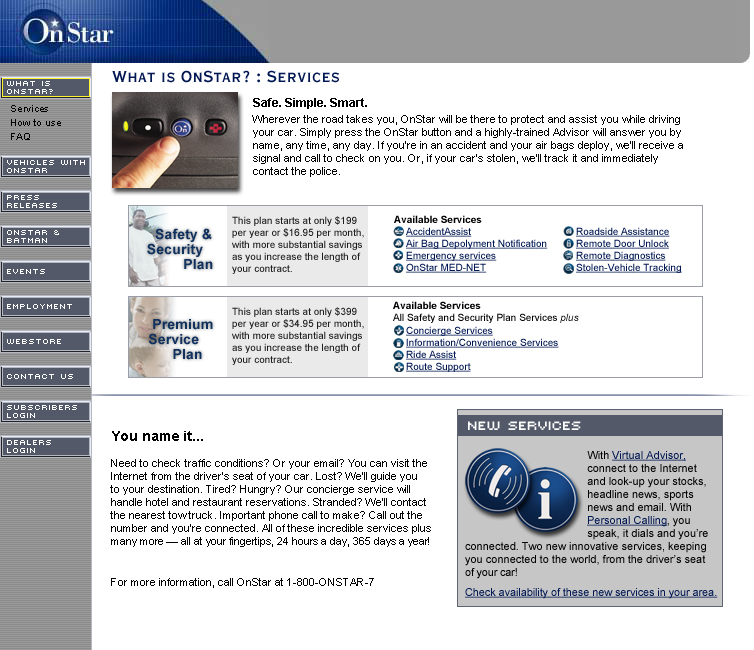
OnStar was the first General Motors brand to move their web platform to Interwoven Teamsite, and they wanted to launch both their U.S. and Canadian sites (in four languages) at the same time; while working with a new off-shore implementation vendor (Wipro). My role was to lead all strategy and design efforts, handle all UX Architect duties, create all documentation (including a 100 page document during the Christmas Holidays written from scratch), and be the primary point-of-contact for the OnStar marketing clients, OnStar IT clients, and Wipro project leads. |
Finally, some other oldies.